
What Makes Molybdenum Sheets Ideal for High-Heat Environments

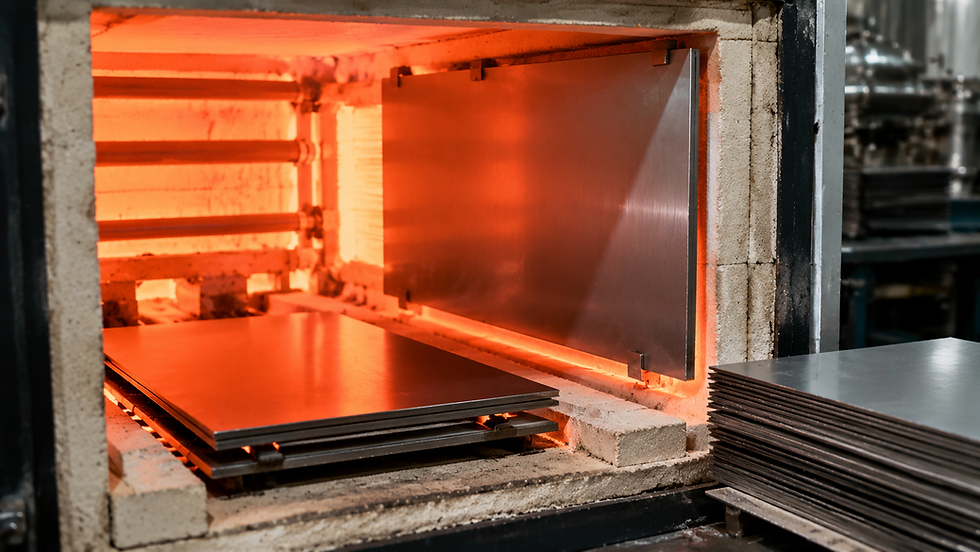
Some metals work well until the temperature starts climbing. After that, problems begin. Sheets can bend, soften, scale, or lose the accuracy needed inside production equipment. Molybdenum is different because it is made for demanding thermal conditions. That is why molybdenum sheets for high temperature applications are used in places where heat is not a short-term challenge but part of the daily working environment.
Its strength comes from more than a high melting point. Molybdenum can retain its form during repeated heating and cooling, which is important in furnaces, vacuum systems, hot zones, and precision processing equipment. When a material has to remain stable over long cycles, small weaknesses can lead to expensive downtime.
Why Molybdenum Stays Reliable Under Pressure
Materials for high-temperature equipment must withstand the heat without going berserk. Molybdenum is good because it retains useful mechanical strength where many ordinary metals begin to lose their shape. This makes industrial molybdenum sheet uses popular in industries such as aerospace support, electronics manufacturing, glass processing, sintering and advanced manufacturing.
Another practical advantage is how molybdenum manages heat movement. Good molybdenum sheet thermal conductivity can help reduce uneven temperature zones across the sheet, lowering the risk of stress, warping, or weak points during operation. That kind of stability is important when the same part is repeatedly exposed to heat.
Common Roles in Furnaces and Thermal Systems
Molybdenum sheets are often used in equipment where heat control and material cleanliness both matter. They can be found in heat shields, furnace liners, support plates, trays, boats, evaporation parts, and sintering fixtures. In these areas, furnace grade molybdenum sheets are valued because they can support controlled performance in high-temperature zones.
Their benefits are straightforward:
● They stay stable in severe heat
● They work well in a vacuum and controlled atmospheres
● They help reduce part replacement frequency
● They support cleaner, more consistent production conditions
For many plants, the goal is not only to choose a strong metal. The goal is to choose a material that keeps the process running without constant adjustment.
Better Than Ordinary Heat-Resistant Options
There are many heat resistant metal materials available, but not all of them are suitable for precision heat work. Some are strong but difficult to form. Some resist heat but are not good in clean or controlled environments. Molybdenum offers a good balance of strength, high-temperature stability, machinability, and predictable performance under thermal cycling.
That balance is why engineers often choose it for parts that cannot fail quickly. It is especially useful where the material needs to keep its dimensions, support weight, reflect or control heat, and remain reliable through repeated use. In high-spec production, those details matter more than the initial material price.
Choosing the Right Molybdenum Sheet
A molybdenum sheet should not be selected by thickness alone. Purity, flatness, finish, tolerance, surface condition, and operating atmosphere all affect performance. A sheet used for shielding may need different properties than one used for support, lining, or precision furnace tooling. This is where working with a dependable refractory metal sheet supplier becomes important.
The right supplier helps buyers match the sheet to the real working conditions. You have to consider the temperature range, exposure time, vacuum level, load, contact surfaces, and handling requirements. Molybdenum is very good in vacuum and inert environments, but if you are going to have heavy oxidation, you may need to plan for it. Careful selection at the start can help avoid poor fit, early wear and the need for replacement later on.
Conclusion
Molybdenum Sheets are the best choice for high-heat applications due to their strength, thermal stability, and ability to allow for controlled heat transfer. They are also good in situations where regular metals wouldn't be. They are of useful application in industrial work such as furnaces, vacuum equipment, thermal shielding, electronics, glass production and precision manufacturing. Reg Metals supplies refractory metals, special alloys, and metal solutions to demanding applications.


Comments