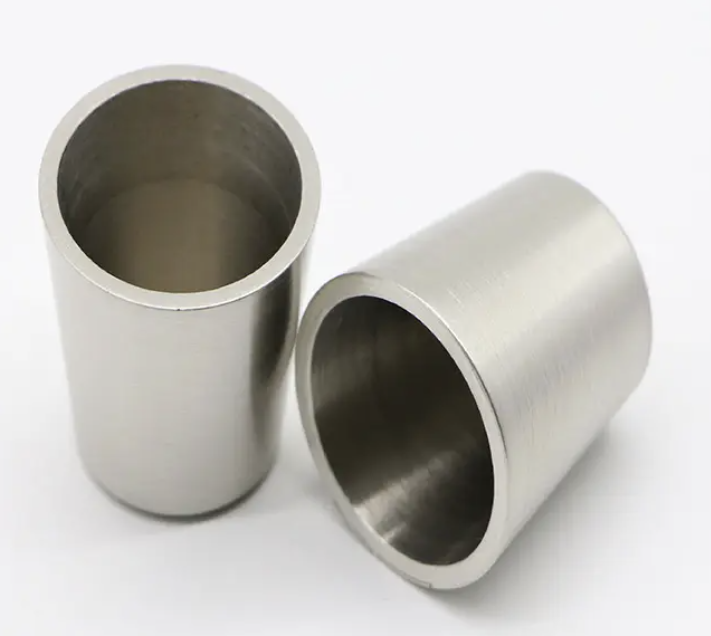
1. What is a molybdenum crucible used for?
Molybdenum crucibles are used in high-temperature material processing, rare-earth metal melting, sapphire crystal growth, vacuum furnace operations, thermal evaporation, and specialized research applications.
2. What is the maximum operating temperature of a molybdenum crucible?
The suitable operating temperature depends on the crucible design, atmosphere, load, and process conditions. Some supplier specifications cite operating ranges around 1,100–1,700°C, with certain designs rated higher under suitable conditions. The melting point of molybdenum is not its recommended operating temperature.
3. What purity levels are available?
High-purity options such as 99.95% and 99.99% molybdenum may be available. The required purity and impurity limits should be specified when requesting a quotation.
4. Can molybdenum crucibles be manufactured to custom dimensions?
Custom sizes may be sourced according to outside diameter, inside diameter, height, wall thickness, bottom thickness, tolerances, and drawing requirements.
5. What is the difference between a pure molybdenum and a TZM crucible?
Pure molybdenum is suitable for many high-temperature applications. TZM is a molybdenum-based alloy containing titanium and zirconium, designed to improve high-temperature strength and creep resistance in appropriate operating conditions.
6. Can molybdenum crucibles be used in vacuum furnaces?
Yes. Molybdenum crucibles are used in many vacuum and controlled-atmosphere furnace applications. Compatibility with the process material, operating temperature, vacuum level, and potential contamination must be evaluated before use.